

Better air quality directly enhances cognitive function, reduces sick days, and improves employee well-being. Poor indoor air quality (IAQ) causes fatigue and headaches, which lower output. WIAR Workplace Performance treats air quality as a core component of a high-performance workplace, not just a technical upgrade. By integrating IAQ into the Develop, Design, Build & Maintain strategy, organizations can turn their physical environment into a strategic asset that supports talent retention and operational excellence.
The Cognitive Cost of Poor Indoor Air
Indoor air quality is the concentration of pollutants, such as volatile organic compounds (VOCs) and carbon dioxide, within a building. When these levels rise, the human brain struggles to process information efficiently. Employees in poorly ventilated spaces often report difficulty concentrating, increased fatigue, and a general sense of malaise. This is not merely a comfort issue; it is a performance bottleneck. The brain requires oxygen to function at peak capacity, and stagnant air deprives it of that essential resource.
Health Implications and Absenteeism
Building-related illness is a condition where occupants experience symptoms like dry eyes, throat irritation, or respiratory issues due to the indoor environment. These symptoms are often subtle but persistent, leading to what is known as the Sick Building Syndrome. While not always diagnosed as a specific disease, the cumulative effect is a higher rate of sick days and lower overall morale. Employees who feel unwell in the office are less likely to engage fully with their work or their colleagues.
For organizations, this translates into direct costs. Lost productivity, temporary staffing, and the administrative burden of managing absenteeism add up. WIAR approaches this through a holistic lens. We do not view air quality in isolation. Instead, we assess the entire building system, including HVAC efficiency and material emissions, to create a healthy baseline. This proactive approach helps clients reduce health-related disruptions and fosters a culture where employees feel cared for, which is a key driver of long-term retention.
Strategic Integration in Workplace Design
Workplace strategy is the process of aligning physical space with organizational goals to maximize performance. In this context, air quality is a critical variable. Many organizations treat ventilation as a compliance requirement, meeting the minimum legal standards but ignoring the potential for optimization. WIAR challenges this passive approach. We advocate for a design that exceeds baseline requirements, using data-driven insights to determine the optimal airflow and filtration for specific work zones.
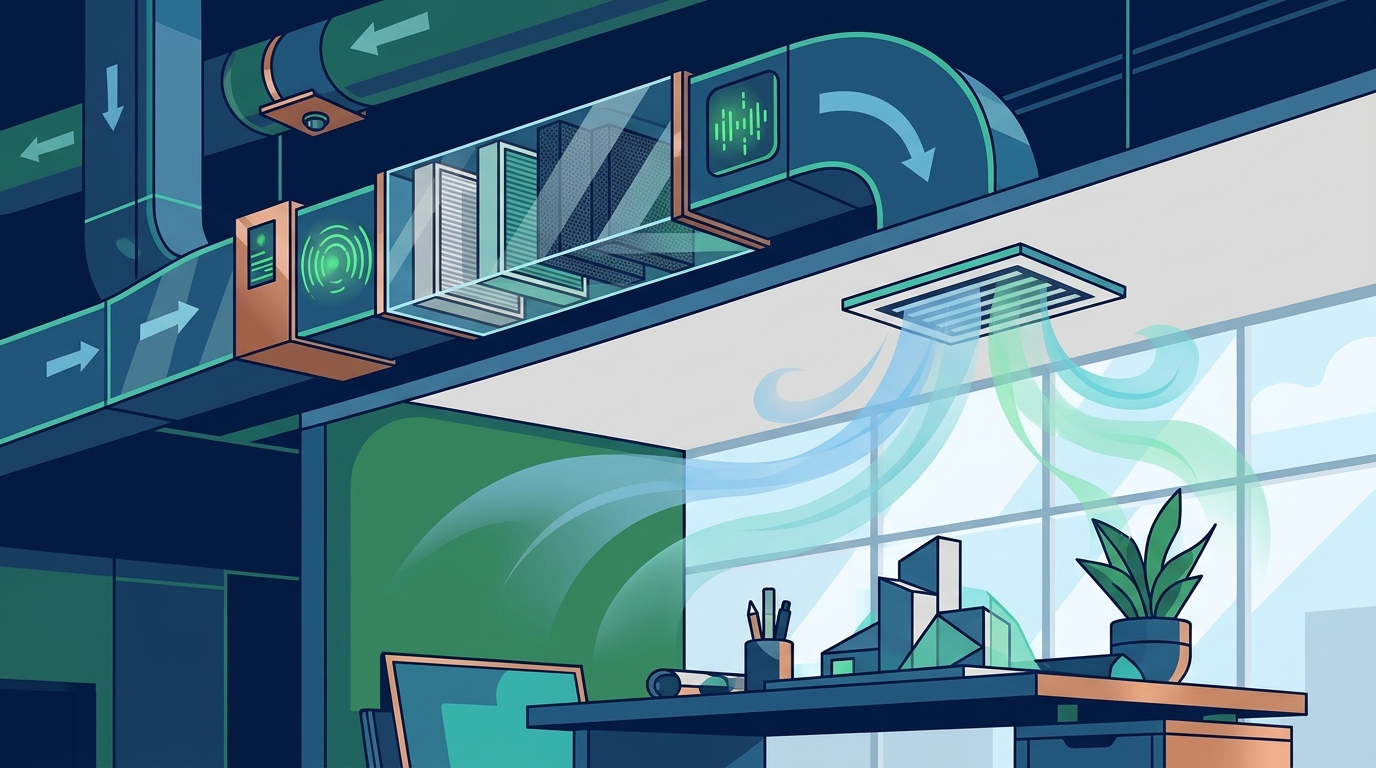
For example, in a recent project for a major client, we integrated advanced air monitoring and purification systems into the renovation of a 3,500 m² headquarters. The goal was not just to clean the air but to create a dynamic environment that responded to occupancy levels. This strategic integration ensures that the air quality remains high even during peak usage times. By treating IAQ as a strategic lever, we help clients achieve a workspace that supports their business objectives, rather than one that merely houses their staff.
Financial ROI of a Healthy Environment
Return on investment in workplace performance is the measurable gain in productivity and cost savings resulting from environmental improvements. While the upfront cost of upgrading HVAC systems or installing air purifiers may seem significant, the long-term benefits often outweigh the expense. The 75/5 Rule highlights that while personnel costs dominate the budget, the workplace is the primary tool that enables those personnel to perform. Neglecting the tool undermines the investment in talent.
WIAR’s approach to procurement and project management ensures that these upgrades are delivered within budget. We operate with 100% Open Book transparency, allowing clients to see exactly where their money goes and how it translates into value. By leveraging our 25 years of experience, we identify cost-effective solutions that deliver high-quality results. This financial discipline ensures that the investment in air quality is a smart business decision, not a sunk cost. The result is a workspace that pays for itself through improved output and reduced health-related losses.
Key Takeaways
- Poor indoor air quality directly impairs cognitive function and decision-making.
- Building-related illness increases absenteeism and reduces employee morale.
- Workplace strategy must integrate air quality as a core performance driver.
- Strategic design can exceed baseline compliance to create a dynamic, healthy environment.
- The financial ROI of a healthy workspace is realized through improved productivity and retention.
- WIAR’s Develop, Design, Build & Maintain approach ensures these upgrades are delivered within budget.
Frequently Asked Questions
How does carbon dioxide affect office productivity?
Elevated CO2 levels reduce cognitive performance, leading to slower decision-making and increased fatigue. Maintaining proper ventilation keeps CO2 levels low, supporting sustained mental clarity.
What is the Sick Building Syndrome?
How does WIAR integrate air quality into workplace design?
Is upgrading air quality cost-effective?
Yes, when managed with financial discipline. WIAR uses a 100% Open Book approach to ensure upgrades are delivered within budget, maximizing the ROI through improved productivity and reduced absenteeism.
What is the 75/5 Rule?
Conclusion
Air quality is a fundamental determinant of office productivity and employee health. By treating it as a strategic priority, organizations can unlock the full potential of their workforce. WIAR Workplace Performance offers the expertise to navigate this complex landscape, ensuring that your workspace is not just a place to work, but a catalyst for success. To explore how we can transform your environment into a high-performance asset, for a strategic consultation.