

The modern corporate landscape has shifted dramatically, with workplace strategy becoming a critical driver of organizational success. Research indicates that high-performance workplaces can significantly boost employee productivity and retention. According to recent industry reports, organizations that prioritize strategic office design see measurable improvements in operational excellence. This guide outlines the essential criteria for creating an environment that drives performance.
Understanding High-Performance Workplaces
A High-Performance Workplace is not merely a physical space but a strategic management instrument. It is designed to align the physical environment with business goals, fostering operational excellence. Unlike traditional offices that focus solely on aesthetics, high-performance environments prioritize functionality, well-being, and efficiency. (Herinrichting BT Amsterdam BT)
At WIAR, we view the office as a motor for growth rather than a cost center. This perspective shifts the focus from superficial changes to deep structural optimization. By treating the workplace as a performance engine, organizations can unlock significant value from their real estate assets. The goal is to create a space that works for the organization, reducing waste and enhancing focus. (Herhuisvesting Axoft IT Telecom)
Key characteristics include:
- Strategic alignment with business objectives.
- Focus on employee well-being and productivity.
- Integration of advanced technology and flexible layouts.
- Continuous measurement and optimization of space utilization.
The 75/5 Rule: Maximizing Impact
One of the core principles in workplace strategy is the 75/5 Rule. In knowledge-intensive organizations, approximately 75% of costs are attributed to talent, while only 5% is spent on the work environment. However, that small 5% determines how effectively the 75% operates. This leverage principle suggests that strategic investment in the workplace yields exponential returns in human capital.
By optimizing the work environment, organizations can reduce absenteeism, improve concentration, and streamline processes. WIAR applies this principle by focusing on high-impact areas such as acoustic comfort, lighting, and spatial layout. These elements, though seemingly minor, have a profound effect on daily performance.
Consider the following comparison of traditional vs. high-performance workplace investments:
| Investment Area | Traditional Approach | High-Performance Approach |
|---|---|---|
| Acoustics | Standard partitions | Acoustic islands and sound-absorbing materials |
| Lighting | Basic fluorescent tubes | Energetic LED systems with circadian rhythms |
| Layout | Fixed desks | Flexible, activity-based zones |
| Climate | Standard HVAC | Advanced climate control for air quality |
Acoustic and Climate Control
Acoustic comfort is a critical factor in maintaining focus. Open-plan offices often suffer from noise pollution, which can reduce productivity by up to 20%. To mitigate this, high-performance environments utilize acoustic ceiling islands and sound-absorbing wall panels. These elements help to dampen noise and create quieter zones for concentrated work.
Climate control is equally important. Poor air quality can lead to fatigue and decreased cognitive function. Advanced HVAC systems ensure optimal air circulation and temperature regulation. WIAR emphasizes the importance of upgrading climate installations to meet modern standards of comfort and sustainability.
Key considerations for acoustic and climate design include:
- Use of sound-absorbing materials in high-traffic areas.
- Implementation of smart climate control systems.
- Regular monitoring of air quality and noise levels.
- Integration of biophilic design elements to enhance well-being.
Flexible Workspace Design
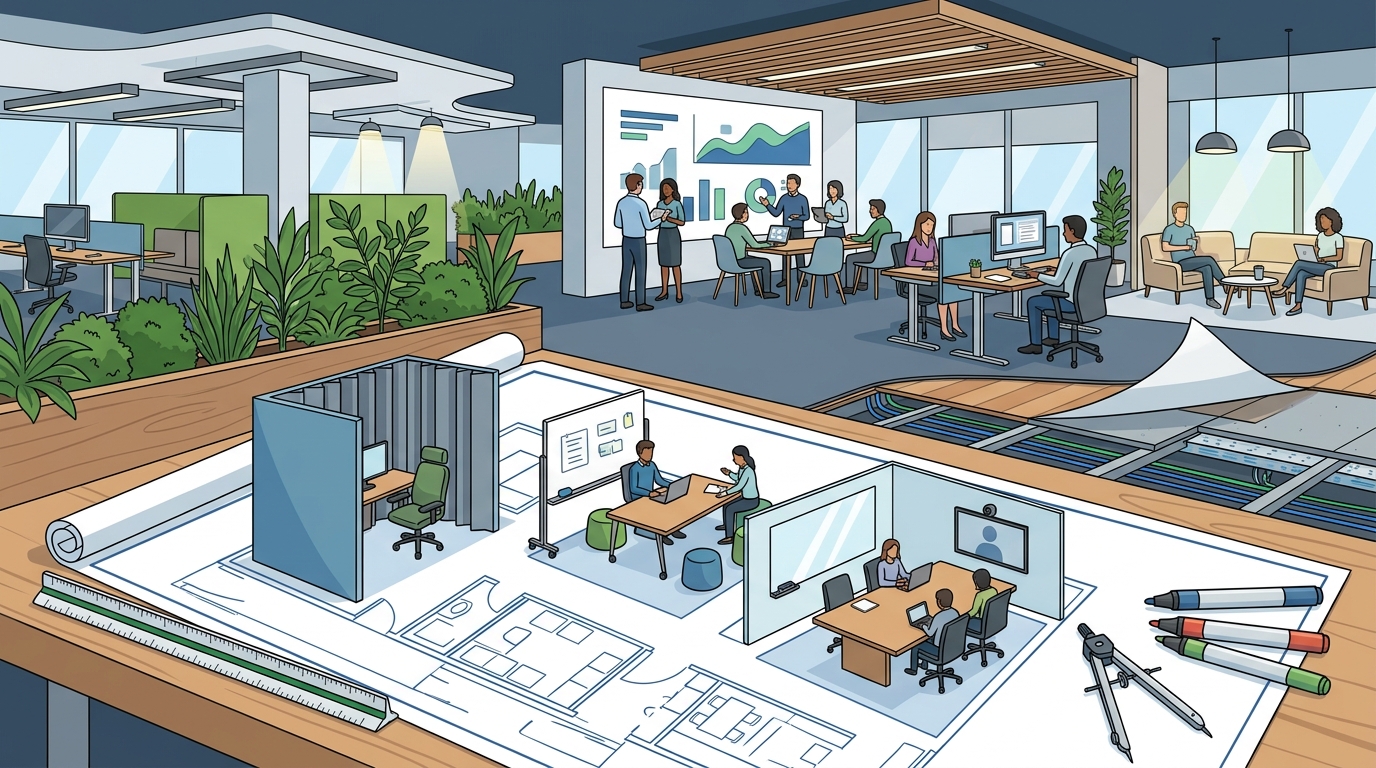
Flexibility is a cornerstone of modern workplace design. Employees need spaces that cater to different tasks, from focused work to collaborative brainstorming. Activity-Based Working (ABW) is a popular approach that provides various settings for different activities.
WIAR designs flexible spaces that support this model. This includes sit-stand desks, collaborative zones, and quiet areas for deep work. The goal is to empower employees to choose the environment that best suits their current task. This autonomy enhances job satisfaction and productivity.
Examples of flexible design elements include:
- Movable partitions for adaptable meeting rooms.
- Hot-desking systems for remote workers.
- Collaborative tables with integrated power and data ports.
- Comfortable lounge areas for informal interactions.
Technology Integration
Technology plays a vital role in enhancing workplace performance. Smart office solutions can automate lighting, climate, and security systems, creating a seamless user experience. Integration of collaboration tools, such as video conferencing systems and digital whiteboards, supports hybrid work models.
WIAR ensures that technology is seamlessly integrated into the physical space. This includes robust data infrastructure, wireless connectivity, and user-friendly interfaces. The aim is to remove technological barriers and enable smooth workflows.
Key technology trends in high-performance offices include:
- IoT sensors for space utilization tracking.
- AI-driven climate and lighting adjustments.
- Virtual reality for immersive training and design.
- Secure cloud-based collaboration platforms.
Real-World Case Studies
WIAR has successfully implemented high-performance workplace strategies for various clients. One notable example is the redesign of the Amnesty International office in Amsterdam. The project involved a complete overhaul of the space to improve collaboration and focus. Key changes included the installation of acoustic ceiling islands and upgraded climate systems.
Another example is the BT Showcase in Amsterdam and Brussels. This project focused on creating an inspiring environment that reflects BT's innovative culture. The design includes flexible meeting spaces and advanced technology integration to support client interactions.
These case studies demonstrate the tangible benefits of strategic workplace design. By focusing on the essential criteria outlined in this guide, organizations can create spaces that drive performance and support their strategic goals.
Key Takeaways
- High-performance workplaces align physical space with business strategy.
- The 75/5 Rule highlights the disproportionate impact of workplace design on talent productivity.
- Acoustic comfort and climate control are critical for employee well-being.
- Flexible workspace design supports diverse work styles and tasks.
- Technology integration enables seamless collaboration and efficiency.
- WIAR offers end-to-end services from strategy to realization.
- Successful case studies include Amnesty International and BT Group.
Frequently Asked Questions
What defines a high-performance workplace?
A high-performance workplace is defined by its ability to align physical design with business goals, enhancing productivity, well-being, and operational excellence.
How does the 75/5 Rule apply to office design?
The 75/5 Rule suggests that a small investment in the work environment (5%) can significantly impact the effectiveness of talent costs (75%), making strategic design crucial.
Why is acoustic comfort important in offices?
Acoustic comfort reduces noise pollution, which can distract employees and reduce productivity by up to 20%. Proper acoustic design helps maintain focus and concentration.
What is Activity-Based Working (ABW)?
Activity-Based Working is a workspace design approach that provides various settings for different tasks, allowing employees to choose the environment that best suits their needs.
How does WIAR ensure successful workplace transformation?
WIAR combines independent advice with risk-bearing realization, ensuring projects are delivered on time, within budget, and to the highest quality standards.
Can technology improve workplace performance?
Yes, technology such as smart climate control, IoT sensors, and collaboration tools can enhance efficiency, comfort, and connectivity in the workplace.
What services does WIAR offer for office redesign?
WIAR offers comprehensive services including workplace strategy, interior design, project management, and realization, tailored to each client's specific needs.
Contact WIAR for Your Workplace Transformation
Ready to transform your office into a high-performance engine? Contact WIAR today to schedule an orientation conversation. Our team of experts is ready to help you unlock the full potential of your workplace. Visit our contact page to get started.