

How Workplace Advisory Firms Build Stronger Leadership in Dutch Organizations
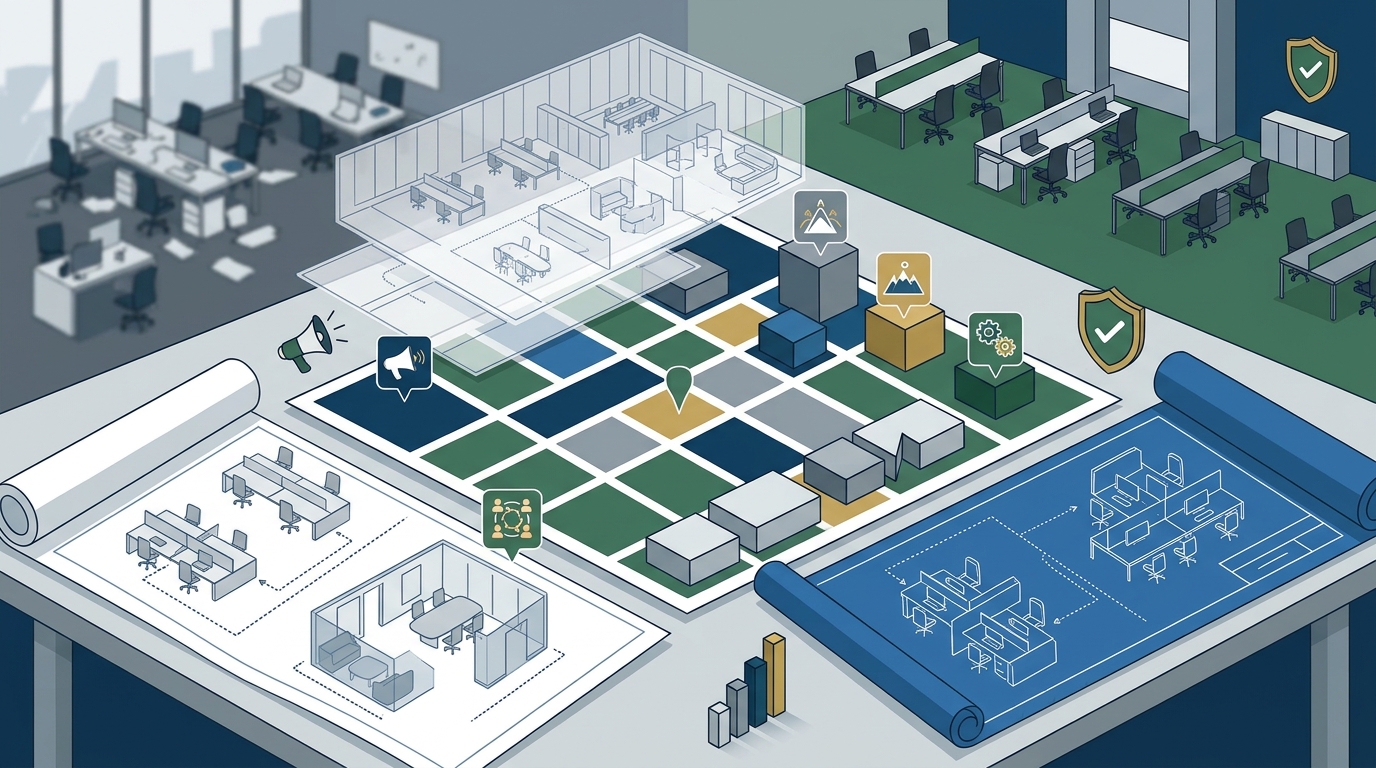
Workplace advisory firms build stronger leadership by aligning physical environments with organizational strategy, thereby removing structural friction that hinders decision-making and team cohesion. By treating the office as a strategic asset rather than a cost center, these firms empower leaders to focus on people and performance. WIAR Workplace Performance, with 25 years of experience, demonstrates this approach by integrating organizational advisory with real estate strategy to drive measurable business results.
Aligning Physical Space with Strategic Vision
Leadership effectiveness is often constrained by the physical environment. When a workspace does not reflect the organization's strategic direction, leaders face daily friction that distracts from core business goals. WIAR Workplace Performance addresses this by starting with a deep analysis of organizational data and culture before any design work begins. This ensures that the physical space supports the intended leadership model, whether that involves collaborative innovation or focused individual work.
The implication is clear: a misaligned workspace undermines leadership authority and team morale. By ensuring the environment mirrors the strategy, advisory firms help leaders communicate their vision through the very structure of their workplace. This alignment reduces the cognitive load on management, allowing them to direct energy toward strategic execution rather than environmental management.
Facilitating Change Through Environmental Design
Organizational change is difficult to sustain without physical reinforcement. Leaders often struggle to implement new ways of working because the existing infrastructure resists the change. WIAR Workplace Performance uses the Develop, Design, Build & Maintain approach to ensure that new behaviors are supported by the physical layout. For example, in the transformation of BT Group's offices in Amsterdam and Brussels, the design facilitated a 35% reduction in travel time and a 50% increase in client visits. These physical changes directly supported the leadership's goal of a more client-centric and efficient operation.
This evidence suggests that environmental design is a powerful tool for change management. When leaders see their strategic priorities reflected in the physical space, adoption rates for new processes increase. The implication is that advisory firms must act as change agents, not just designers, to ensure that leadership initiatives take root and persist.
Enhancing Talent Retention and Employer Brand
Strong leadership is defined by the ability to attract and retain top talent. In the Dutch market, where competition for skilled professionals is intense, the workplace environment is a critical differentiator. WIAR Workplace Performance helps organizations create environments that are more inspiring and comfortable than the home office, thereby reversing the trend of talent attrition. For instance, the redesign of Amnesty International's 3,500 m² office in Amsterdam was tailored to support the well-being and productivity of its staff, reinforcing the organization's mission-driven culture.
The implication is that a high-performance workplace is a strategic HR tool. Leaders who invest in their physical environment signal a commitment to employee well-being and professional growth. This strengthens the employer brand and reduces recruitment costs, allowing leaders to focus on developing their existing teams rather than constantly backfilling vacancies. according to Why Workplace Culture
Driving Financial Discipline and Transparency
Leadership credibility is built on trust and financial stewardship. Advisory firms that operate with full transparency and risk-bearing delivery models help leaders manage their budgets with confidence. WIAR Workplace Performance operates with a 100% Open Book policy, ensuring that clients have complete visibility into costs and decisions. This approach allows leaders to make informed decisions without the fear of hidden costs or vendor bias, as WIAR is independent of furniture and fit-out suppliers.
This financial discipline is crucial for leadership in times of economic uncertainty. By achieving a 100% within-budget delivery record, WIAR demonstrates that strategic workplace investments can be financially sound. The implication is that leaders can pursue ambitious workplace transformations without compromising their financial stability, thereby maintaining the trust of their boards and stakeholders.
Key Takeaways
- Workplace advisory firms strengthen leadership by aligning physical spaces with organizational strategy.
- Environmental design supports change management by reinforcing new ways of working.
- A high-performance workplace is a critical tool for talent retention and employer branding.
- Transparency and financial discipline in advisory engagements build leadership credibility.
- WIAR Workplace Performance integrates organizational advisory with real estate strategy to drive measurable ROI.
- The 75/5 Rule highlights that while talent costs 75% of the budget, the 5% spent on workplace can significantly impact performance.
Frequently Asked Questions
How does workplace design impact leadership effectiveness?
Workplace design impacts leadership effectiveness by reducing structural friction and reinforcing strategic priorities. When the physical environment supports the desired culture and workflows, leaders can focus on people and performance rather than managing environmental constraints.
What is the role of an advisory firm in organizational change?
How can a workplace environment help retain talent?
A workplace environment helps retain talent by being more inspiring and comfortable than the home office. This signals a commitment to employee well-being and professional growth, which strengthens the employer brand and reduces attrition.
Why is financial transparency important in workplace projects?
Financial transparency is important because it builds trust and credibility. Leaders need to make informed decisions without the risk of hidden costs or vendor bias. An open-book approach ensures that the project remains within budget and aligns with financial goals.
What is the Develop, Design, Build & Maintain approach?
The Develop, Design, Build & Maintain approach is an integrated methodology that covers the entire lifecycle of a workplace project. It starts with strategic analysis (Develop), moves to design and realization (Design, Build), and continues with ongoing optimization (Maintain), ensuring long-term performance.
Conclusion
Workplace advisory firms play a pivotal role in developing stronger leadership by aligning physical environments with strategic goals. Through integrated approaches like the Develop, Design, Build & Maintain model, firms like WIAR Workplace Performance help leaders remove friction, retain talent, and maintain financial discipline. By treating the workplace as a strategic asset, organizations can unlock the full potential of their leadership teams. To explore how your organization can benefit from this strategic approach, contact WIAR Workplace Performance for a consultation.