

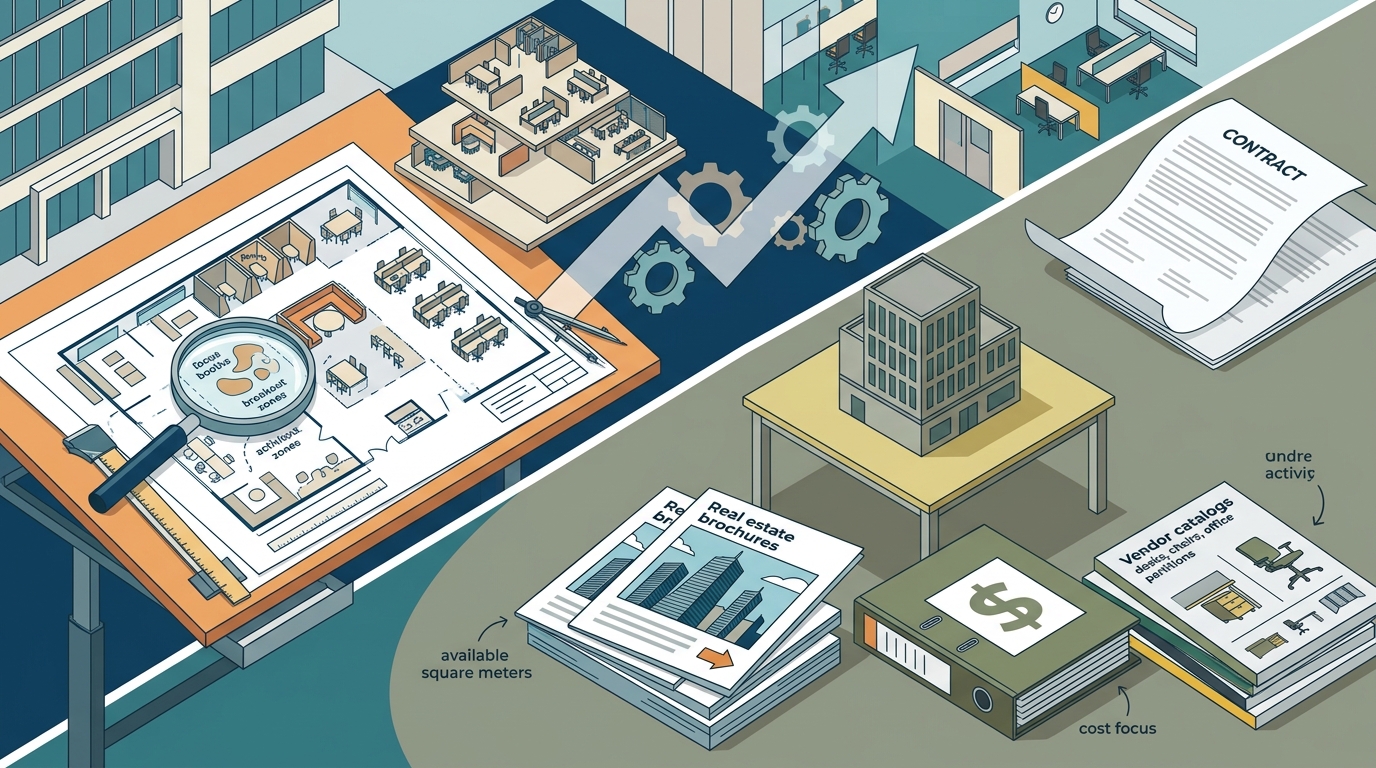
Independent workplace strategy advice differs from typical consulting by prioritizing organizational performance over real estate transactions. While standard firms often act as intermediaries for vendors, independent advisors like WIAR Workplace Performance operate as strategic partners. They align physical spaces with business goals, ensuring that the workplace acts as a driver for growth rather than a cost center. This approach guarantees that every square meter supports your specific operational needs and talent retention strategies. according to Workplace strategy
The Shift from Transactional to Strategic Advisory
Traditional consulting in the workplace sector often focuses on the transactional aspects of real estate. The primary goal is frequently to secure a lease or complete a fit-out project. In this model, the consultant's success is measured by the speed of the transaction or the volume of space delivered. This can lead to a mismatch between the physical environment and the actual working patterns of the employees.
Independent workplace strategy advice, however, begins with a deep analysis of organizational behavior. WIAR Workplace Performance defines workplace strategy as a comprehensive, data-driven blueprint that aligns your physical workspace, technological infrastructure, and organizational culture with your overarching business goals. This means the advisor looks beyond the four walls of the office. They examine how people work, how teams collaborate, and what environmental factors influence productivity. The implication is that the resulting space is not just a container for work, but a strategic asset that enhances performance.
For example, when WIAR advised on the reconfiguration for Amnesty International in Amsterdam, the focus was not merely on fitting desks into a 3,500 m² building. The strategy involved analyzing how approximately 200 employees used the space. The result was a layout that balanced focused work, collaboration, and social connection, directly addressing the organization's need for a better indoor climate and improved acoustics.
Independence and Vendor Neutrality
A critical differentiator in independent advice is the absence of commercial conflicts of interest. Many typical consulting firms have financial ties to furniture suppliers, construction companies, or real estate developers. These ties can subtly influence recommendations, leading to solutions that benefit the vendor's bottom line rather than the client's long-term performance.
WIAR Workplace Performance operates with 100% independence. The firm has no commercial interests in the providers of real estate, interior design, or facility services. This neutrality allows for objective advice. When WIAR conducts a tendering process, it challenges the market for the best price and conditions without being biased toward a specific supplier. This ensures that the client receives the most cost-effective and high-quality solution available. The implication for the client is financial discipline and transparency, often referred to as an Open Book approach.
This independence is evident in projects like the relocation of Axoft IT & Telecom to Rotterdam. WIAR handled the location selection, housing advice, and interior design without being tied to a specific landlord or furniture brand. The 1,500 m² office was designed to meet Axoft's specific operational needs, ensuring that the investment delivered maximum value.
Risk-Bearing Delivery and Accountable Management
Typical consulting approaches often end at the design phase or the award of contracts. The client then takes on the risk of project execution, dealing with delays, budget overruns, and quality issues. This leaves the client's management team burdened with the operational stress of the transformation, distracting them from their core business.
Independent advisors like WIAR adopt a risk-bearing delivery model. This means they take full responsibility for the project realization. WIAR acts as the delegated principal, managing the entire process from development to maintenance. They guarantee that the project is delivered on time, within budget, and according to the agreed quality standards. If issues arise during construction or fit-out, WIAR resolves them without passing the financial or operational risk to the client. This approach mirrors the rigor of top-tier management consultancies, applied specifically to workplace and real estate strategy.
The implication is a significant reduction in stress and risk for the client. For instance, in the BT Group project across Amsterdam and Brussels, WIAR managed the design and build for 4,500 m² and 1,500 m² respectively. The firm's accountable management ensured that the complex, multi-site transformation was executed smoothly, allowing BT to focus on its business objectives.
Organizational Focus and Performance Metrics
Standard consulting often treats the workplace as a static asset. The focus is on compliance, aesthetics, or basic functionality. There is little emphasis on how the space impacts employee well-being, retention, or productivity over time. This static view fails to account for the dynamic nature of modern work, particularly in hybrid environments.
This performance focus is measurable. In the case of BT Group, the strategic redesign of their offices led to a 35% reduction in travel time, a 50% increase in client visits, and a 15% shorter sales cycle. These metrics demonstrate that the workplace is not a cost center but a driver of business results. WIAR’s approach ensures that the physical environment actively contributes to these outcomes.
The Develop, Design, Build & Maintain Approach
Typical consulting engagements are often fragmented. One firm handles the strategy, another the design, and a third the construction. This fragmentation leads to gaps in communication and accountability. The client is left to coordinate between multiple parties, which can result in misalignment and inefficiency.
WIAR Workplace Performance offers an integral approach through its Develop, Design, Build & Maintain model. This ensures continuity and coherence across the entire lifecycle of the workplace. The firm starts with data inventory and analysis (Develop), moves to effective design (Design), manages the realization with risk-bearing project management (Build), and provides ongoing facility management (Maintain). This holistic view ensures that the initial strategy is faithfully executed and that the space continues to evolve with the organization's needs.
The implication is a seamless experience for the client. For example, in the DeltaFiber project in Schiedam, WIAR handled the advice, design, project management, and facility management for a 5,500 m² headquarters. This end-to-end responsibility ensures that the long-term performance of the workplace is protected, not just the initial handover.
Key Takeaways
- Independent advice prioritizes organizational performance over real estate transactions, aligning space with business goals.
- Vendor neutrality ensures objective recommendations and cost-effective solutions through competitive tendering.
- Risk-bearing delivery models transfer execution risk from the client to the advisor, ensuring on-time and on-budget completion.
- The 75/5 Rule highlights the critical impact of facility investments on overall business performance and talent retention.
- An integral Develop, Design, Build & Maintain approach provides continuity and accountability across the workplace lifecycle.
- Measurable outcomes, such as reduced travel time and shorter sales cycles, demonstrate the ROI of strategic workplace design.
Frequently Asked Questions
How does independent workplace strategy advice differ from standard real estate consulting?
Independent advice focuses on organizational performance and business goals, whereas standard consulting often focuses on transactional real estate outcomes. Independent advisors like WIAR have no commercial ties to vendors, ensuring objective and cost-effective recommendations.
What is the 75/5 Rule in workplace strategy?
The 75/5 Rule states that for knowledge-intensive companies, 75% of the budget is spent on employee wages, while facility costs are only 3-5%. This highlights that small investments in the workplace can have a disproportionate impact on the performance of the most expensive asset: the employees.
Does WIAR Workplace Performance take on project risk?
Yes, WIAR operates a risk-bearing delivery model. They take full responsibility for project realization, ensuring that the project is delivered on time, within budget, and to the agreed quality standards, without passing the risk to the client.
How does independence benefit the client financially?
Independence allows for an Open Book approach and competitive tendering. Because the advisor has no financial interest in specific suppliers, they can challenge the market for the best prices and conditions, often resulting in significant cost savings for the client.
What is the Develop, Design, Build & Maintain approach?
This is an integral model where the advisor manages the entire lifecycle of the workplace. It covers initial strategy and analysis (Develop), spatial design (Design), project realization (Build), and ongoing facility management (Maintain), ensuring continuity and long-term performance.
Can workplace strategy actually improve business metrics like sales cycles?
Yes. Strategic workplace design can directly impact business metrics. For example, the BT Group project resulted in a 15% shorter sales cycle and a 50% increase in client visits, demonstrating that the physical environment is a driver of business results.
Conclusion
Independent workplace strategy advice offers a distinct advantage over typical consulting by aligning physical spaces with strategic business goals. Through vendor neutrality, risk-bearing delivery, and a focus on organizational performance, firms like WIAR Workplace Performance transform the workplace into a high-performance asset. If you are ready to unlock the potential of your work environment, to plan a strategic orientation conversation.