

Organizations seeking operational excellence often struggle with traditional office transformations that fail to deliver measurable business value. According to industry benchmarks, over 60% of workplace initiatives do not meet their initial strategic objectives due to fragmented vendor management and misaligned incentives. This gap exists because most providers prioritize product sales over organizational performance. The HEVO strategy, rooted in risk-bearing project delivery, eliminates this friction by aligning the partner's financial success directly with the client's operational outcomes.
Understanding the HEVO Strategy Core
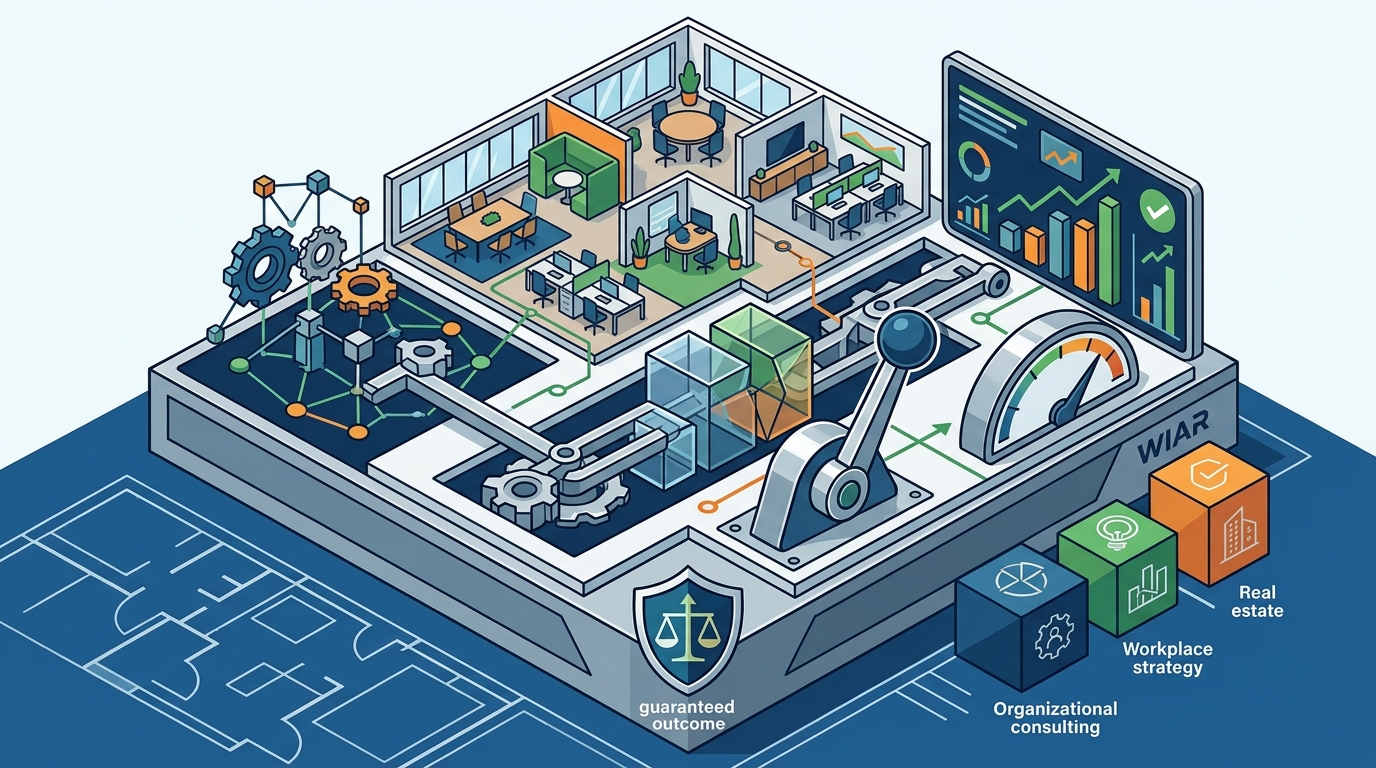
The HEVO strategy is not merely a design philosophy; it is a rigorous management framework designed to transform physical workspaces into strategic assets. In knowledge-intensive organizations, talent represents the majority of operational costs. However, the environment in which this talent operates dictates their efficiency, focus, and retention. The HEVO approach treats the office as a performance engine rather than a static cost center.
At its foundation, the HEVO strategy relies on the principle that physical space and business performance are inextricably linked. By applying certified management consulting methodologies to facility management, organizations can identify and eliminate waste in their physical operations. This includes reducing noise pollution, optimizing circulation paths, and enhancing indoor air quality to boost cognitive function. The result is a High Performance Workplace where energy flows freely and stress is minimized.
Unlike traditional consultants who provide recommendations and exit the project, the HEVO strategy demands continuous involvement. It bridges the gap between strategic planning and physical realization. This ensures that the final built environment perfectly matches the initial strategic vision. The strategy prioritizes long-term operational excellence over short-term aesthetic gains, ensuring the workspace remains relevant and effective for years to come.
The Risk-Bearing Delivery Model
Traditional project delivery models often leave clients vulnerable to budget overruns and timeline delays. Contractors and consultants operate in silos, each protecting their own margins. The risk-bearing model fundamentally changes this dynamic. In this structure, the project partner assumes full responsibility for the outcome, including cost and schedule adherence.
This approach eliminates the adversarial relationship between client and vendor. When the partner guarantees a fixed contract sum and a guaranteed delivery date, their incentives align perfectly with the client's success. There is no financial benefit to dragging out the project or cutting corners on quality. Instead, the partner is motivated to find efficiencies and innovate to deliver value within the agreed parameters.
The risk-bearing model also ensures 100% independence. The partner acts as a trusted advisor, loyal solely to the client's interests. They do not push specific vendor products for higher commissions. Instead, they select the best solutions based on rigorous diagnostic analysis. This independence is critical for achieving true operational excellence, as it prevents market bias from influencing strategic decisions.
Step-by-Step Implementation
Implementing the HEVO strategy requires a disciplined, phased approach. Each step builds upon the previous one, ensuring that strategic intent is preserved throughout the construction and fit-out process. The following steps outline the standard protocol for successful delivery.
Phase 1: Strategic Diagnostic and Visioning
The process begins with a deep dive into the organization's current operational challenges. This involves analyzing how employees use space, identifying pain points in circulation and collaboration, and assessing the impact of the current environment on productivity. Data collection methods include space utilization studies, employee surveys, and workflow analysis.
Based on this diagnostic, a strategic blueprint is created. This blueprint defines the desired future state of the workplace, outlining specific performance metrics such as reduced absenteeism, improved collaboration rates, and enhanced brand perception. The vision is not just about aesthetics; it is about creating a measurable instrument for business growth.
Phase 2: Integrated Design and Planning
With the strategy defined, the design phase focuses on translating strategic goals into physical solutions. This is where the HEVO strategy shines, as design decisions are directly tied to operational outcomes. For example, if the goal is to increase spontaneous collaboration, the design will incorporate flexible meeting zones and acoustic privacy pods.
During this phase, the risk-bearing partner manages all technical specifications, ensuring that the design is feasible, compliant, and cost-effective. They coordinate with architects, engineers, and specialist consultants to create a unified project plan. This integrated approach prevents the common issue of design intent being lost during construction.
Phase 3: Procurement and Contract Management
Procurement under the HEVO strategy is transparent and aligned with the strategic blueprint. The partner leverages their industry relationships to secure the best value for materials and labor, without compromising on quality. Because they operate on a fixed-price basis, they are incentivized to negotiate aggressively on behalf of the client.
Contract management is rigorous, with regular checkpoints to ensure all vendors are meeting their obligations. The risk-bearing partner acts as the single point of contact, streamlining communication and resolving issues before they escalate. This reduces administrative burden on the client and keeps the project on track.
Phase 4: Construction and Realization
Construction is managed with a focus on minimizing disruption to ongoing business operations. The partner implements detailed logistics plans to ensure that work proceeds safely and efficiently. Regular progress reports keep the client informed of milestones and any potential risks.
Quality control is paramount. The risk-bearing partner conducts frequent site inspections to ensure that the work matches the design specifications and meets the highest standards of craftsmanship. Any deviations are addressed immediately, preventing costly rework later in the process.
Phase 5: Handover and Performance Monitoring
The final phase involves a comprehensive handover of the new workspace. This includes detailed training for facility management teams, documentation of all systems, and a walkthrough of the new operational protocols. The goal is to ensure that the client can fully utilize the new environment from day one.
Post-occupancy, the HEVO strategy often includes a performance monitoring period. This allows the organization to measure the actual impact of the transformation against the initial strategic goals. Adjustments can be made to optimize the space further, ensuring long-term success.
Real-World Application
The effectiveness of the HEVO strategy is best illustrated through real-world examples. Organizations that have adopted this risk-bearing model have seen significant improvements in operational efficiency and employee satisfaction.
| Client | Challenge | HEVO Solution | Outcome |
|---|---|---|---|
| Amnesty International | Need for better collaboration and improved indoor climate in a historic building. | Complete renovation with acoustic islands and LED lighting. | Enhanced focus and reduced noise pollution. |
| BT Group | Inefficient sales demonstrations and lack of 'wow' factor. | Design & Build showcase environments in Amsterdam and Brussels. | Shorter sales cycles and increased client engagement. |
| AkzoNobel | Complex logistics for global event teambases. | Design & Build teambases for Volvo Ocean Race. | Seamless execution across 13 global ports. |
These cases demonstrate the versatility of the HEVO strategy. Whether dealing with historic renovations, corporate showcases, or global event logistics, the risk-bearing model ensures consistent quality and strategic alignment.
Key Takeaways
- The HEVO strategy transforms offices from cost centers into strategic performance engines.
- Risk-bearing delivery guarantees fixed budgets and guaranteed completion dates.
- 100% independence ensures vendor recommendations are unbiased and client-focused.
- Integrated design and construction prevent the loss of strategic intent.
- Real-world cases like BT Group show measurable sales improvements.
- Acoustic and climate improvements directly impact employee cognitive performance.
- The model is ideal for knowledge-intensive organizations seeking operational excellence.
Frequently Asked Questions
What is the HEVO strategy?
The HEVO strategy is a management framework that aligns physical workspace design with business performance goals, using risk-bearing project delivery to ensure strategic outcomes.
How does risk-bearing delivery differ from traditional consulting?
Unlike traditional consultants who only advise, risk-bearing partners assume financial and schedule responsibility, guaranteeing fixed costs and delivery dates.
Why is independence important in workplace strategy?
Independence ensures that recommendations are based on client needs rather than vendor commissions, leading to more effective and cost-efficient solutions.
Can the HEVO strategy be applied to historic buildings?
Yes, as demonstrated by the Amnesty International project, the strategy can successfully navigate the complexities of historic renovations.
What metrics are used to measure success?
Success is measured through operational metrics such as reduced absenteeism, improved collaboration rates, and enhanced employee productivity.
Is the HEVO strategy suitable for global organizations?
Absolutely. The model has been successfully deployed for global events like the Volvo Ocean Race, managing complex logistics across multiple countries.
How long does a typical HEVO project take?
Duration varies by scope, but the risk-bearing model ensures that the agreed-upon timeline is strictly adhered to, providing certainty for planning.
Transform Your Workplace Today
Stop treating your office as a cost center. Start treating it as a strategic asset. The HEVO strategy offers a proven path to operational excellence through risk-bearing project delivery. By choosing a partner who guarantees both independence and performance, you secure a workspace that drives business growth.
Ready to explore how a High Performance Workplace can benefit your organization? Contact WIAR today to schedule your strategic orientation session and discover the value hidden in your four square meters.