

The modern corporate landscape is undergoing a seismic shift. Organizations are no longer viewing their physical offices as mere cost centers but as strategic assets that drive performance. According to recent industry analyses, companies that align their real estate strategy with their operational goals see a significant increase in employee productivity and retention. This guide explores how specialized advisory firms bridge the gap between high-level business strategy and the physical execution of workplace design.
What Is Workplace Transformation?
Workplace transformation is the systematic realignment of an organization's physical environment, technology, and culture to support its strategic business objectives. It is not simply a renovation project. It is a holistic approach to optimizing how people work together. The core philosophy recognizes that the physical workspace directly influences cognitive function, collaboration, and overall business performance.
At its foundation, workplace transformation is the process of converting a static office into a dynamic engine for growth. This involves analyzing space utilization, improving indoor air quality, and integrating flexible work models. When executed correctly, it reduces operational waste and enhances the employee experience. The goal is to create a High Performance Workplace where energy flows freely and stress is minimized.
The Role of Strategic Advisory Firms
Many organizations struggle to navigate the complexity of real estate planning. They often face conflicting advice from vendors who are loyal to their own products rather than the client's best interests. This is where independent advisory firms provide critical value. These firms act as trusted advisors, ensuring that every square meter of space delivers measurable return on investment.
Advisory firms combine independent consulting with risk-bearing realization. This means they do not just draw plans; they manage the entire lifecycle from vision to handover. By removing the conflict of interest inherent in traditional vendor relationships, they guarantee loyalty to the client's goals. This approach ensures that the final outcome aligns perfectly with the organization's operational excellence standards.
The advisory process begins with a deep diagnostic of current operations. Consultants analyze how employees currently use space, identify bottlenecks, and forecast future needs. This data-driven approach prevents costly mistakes and ensures that the final design is fit for the future. The result is a workspace that works for the organization, not against it.
Key Services in Real Estate Planning
Effective workplace transformation requires a multidisciplinary approach. Advisory firms offer a suite of services that cover every aspect of the project. These services ensure that the physical environment supports both individual focus and collaborative innovation.
Workplace Strategy and Space Planning
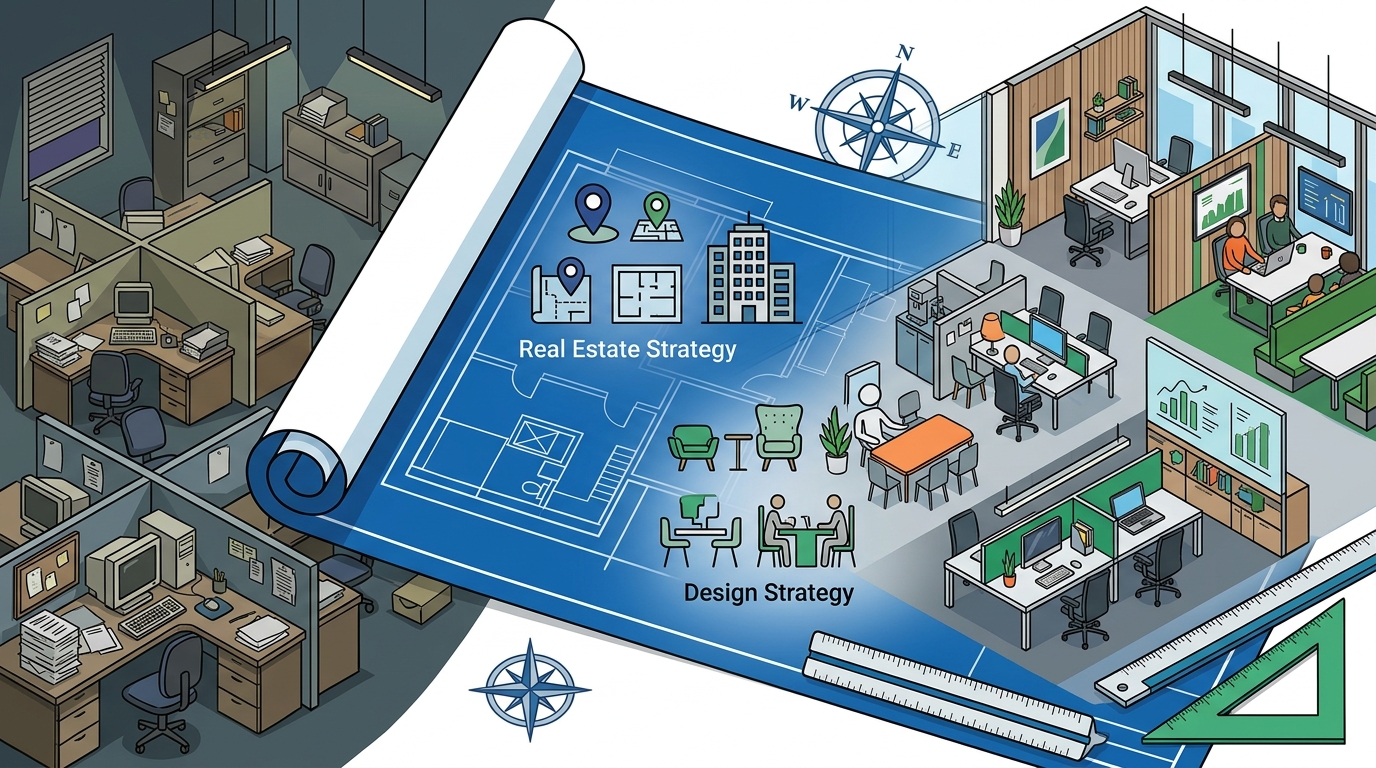
This service involves creating a detailed blueprint for how space will be used. It includes determining the ratio of private offices to collaborative zones, designing hot-desking systems, and planning for hybrid work models. The strategy is tailored to the specific needs of the organization, ensuring that space allocation matches actual usage patterns.
Interior Design and Concept Development
Interior design in this context goes beyond aesthetics. It focuses on creating environments that promote well-being and productivity. This includes selecting materials that improve acoustics, installing energy-efficient lighting, and designing intuitive circulation paths. The design must reflect the company's brand while supporting its operational goals.
Project and Contract Management
Managing a large-scale renovation is complex. Advisory firms provide rigorous project management to keep the project on time and within budget. They handle contractor selection, negotiate contracts, and monitor progress. This ensures that the client faces no unexpected costs or delays. The guarantee of fixed pricing and delivery dates provides peace of mind for stakeholders.
Proven Success Stories
Real-world examples demonstrate the impact of strategic workplace transformation. Organizations that have undergone this process report significant improvements in employee satisfaction and operational efficiency. Below are examples of how specialized advisory firms have delivered results for diverse clients.
| Client | Challenge | WIAR Solution | Outcome |
|---|---|---|---|
| Amnesty International | Need for better collaboration in a historic building | Complete redesign with acoustic improvements | Enhanced focus and modernized infrastructure |
| AkzoNobel | Global team base requirements | Design & Build for 13 ports | Consistent brand experience worldwide |
| BT Group | Showcasing technology to clients | Strategic showcase environments | Increased client engagement and innovation |
| Axoft | Relocation and IT infrastructure integration | Full relocation management | Seamless transition with minimal downtime |
These cases highlight the versatility of advisory services. Whether it is a non-profit organization or a global telecom giant, the principles of strategic planning remain the same. The focus is always on delivering value through intelligent design and rigorous execution.
How to Choose the Right Partner
Selecting an advisory firm is a critical decision. Organizations must look for partners who offer independence and accountability. The best firms operate as strategic partners, not just service providers. They take ownership of the project's success and share in the risk.
Look for firms that adhere to the "75/5 Rule". This principle states that while 75% of costs go to talent, only 5% goes to the workplace. However, that small 5% determines how effectively the 75% operates. A good advisor will help you leverage this leverage point to maximize human capital. They will focus on high-impact changes that yield exponential returns.
Additionally, verify the firm's track record. Do they have experience in your industry? Can they provide references for similar projects? Do they offer guarantees on budget and timeline? These factors are essential for ensuring a successful transformation. The right partner will guide you from vision to reality without the usual risks.
Key Takeaways
- Workplace transformation is a strategic lever for business performance, not just a facility upgrade.
- Independent advisory firms eliminate vendor bias, ensuring solutions are tailored to client needs.
- The "75/5 Rule" highlights the disproportionate impact of workplace design on talent productivity.
- Successful projects require integrated services: strategy, design, and risk-bearing project management.
- Real-world examples like Amnesty International and BT Group show measurable improvements in engagement.
- Fixed-price contracts and guaranteed delivery dates are key indicators of a reliable partner.
- High Performance Workplaces reduce absenteeism and enhance focus through better environmental design.
Frequently Asked Questions
What is the difference between interior design and workplace strategy?
Interior design focuses on the aesthetic and functional aspects of the physical space. Workplace strategy is a broader business discipline that aligns the physical environment with organizational goals, culture, and operational needs. Strategy comes first; design follows.
Why is independent advice important for real estate planning?
Traditional vendors often have conflicts of interest, pushing their own products. Independent advisors are loyal only to the client. They provide unbiased recommendations that optimize the client's specific requirements, leading to better value and outcomes.
How long does a workplace transformation project take?
The timeline varies based on the scope and complexity of the project. However, advisory firms typically provide guaranteed delivery dates. This ensures that the organization can plan for minimal disruption and predictable completion.
What is a High Performance Workplace?
A High Performance Workplace is an environment specifically designed to maximize employee productivity, well-being, and collaboration. It uses data-driven design principles to create spaces that support both focused work and dynamic interaction.
Can advisory firms help with office relocation?
Yes. Advisory firms provide comprehensive relocation management. This includes site selection, lease negotiation, design, construction oversight, and the actual move process. They ensure a seamless transition with minimal impact on business operations.
How does workplace design impact employee retention?
A well-designed workplace signals that an organization values its employees. It provides the tools and environment needed for success, which increases job satisfaction. Studies show that employees are more likely to stay with companies that offer modern, supportive workspaces.
What is the "75/5 Rule" in workplace strategy?
The 75/5 Rule states that 75% of organizational costs are related to talent, while only 5% are related to the workplace. However, that 5% investment has a massive impact on how effectively the 75% performs. It is a leverage point for organizational success.
Start Your Transformation
Are you ready to turn your office into a performance engine? Stop searching for individual vendors and start working with a strategic partner. WIAR offers independent advice, risk-bearing realization, and a guarantee of excellence. Contact us today to plan your orientation conversation and discover how we can help your organization excel.