

Estimating an office move budget requires more than calculating square footage and furniture. It demands a holistic view of real estate, technical infrastructure, and operational continuity. WIAR Workplace Performance helps organizations navigate these complex financial variables with transparency. By identifying the right cost categories early, you can prevent budget overruns and ensure a smooth transition. according to Grants 101 Develop
1. Real Estate and Lease Costs
Lease terms and property condition dictate the foundational financial commitment. This category includes rent, service charges, and potential lease breakage fees. It also covers the cost of bringing a new space up to code, such as HVAC upgrades or electrical work. WIAR analyzes these variables to ensure the total cost of ownership aligns with your long-term strategy.
2. Interior Fit-Out and Construction
Construction costs are often the largest single line item in a relocation budget. This covers demolition, new partitions, flooring, ceilings, and lighting. It is critical to distinguish between base building work and tenant improvements. WIAR manages this phase with strict financial discipline, ensuring that design choices do not compromise the budget.
3. Furniture and Fittings
4. IT and Telecommunications
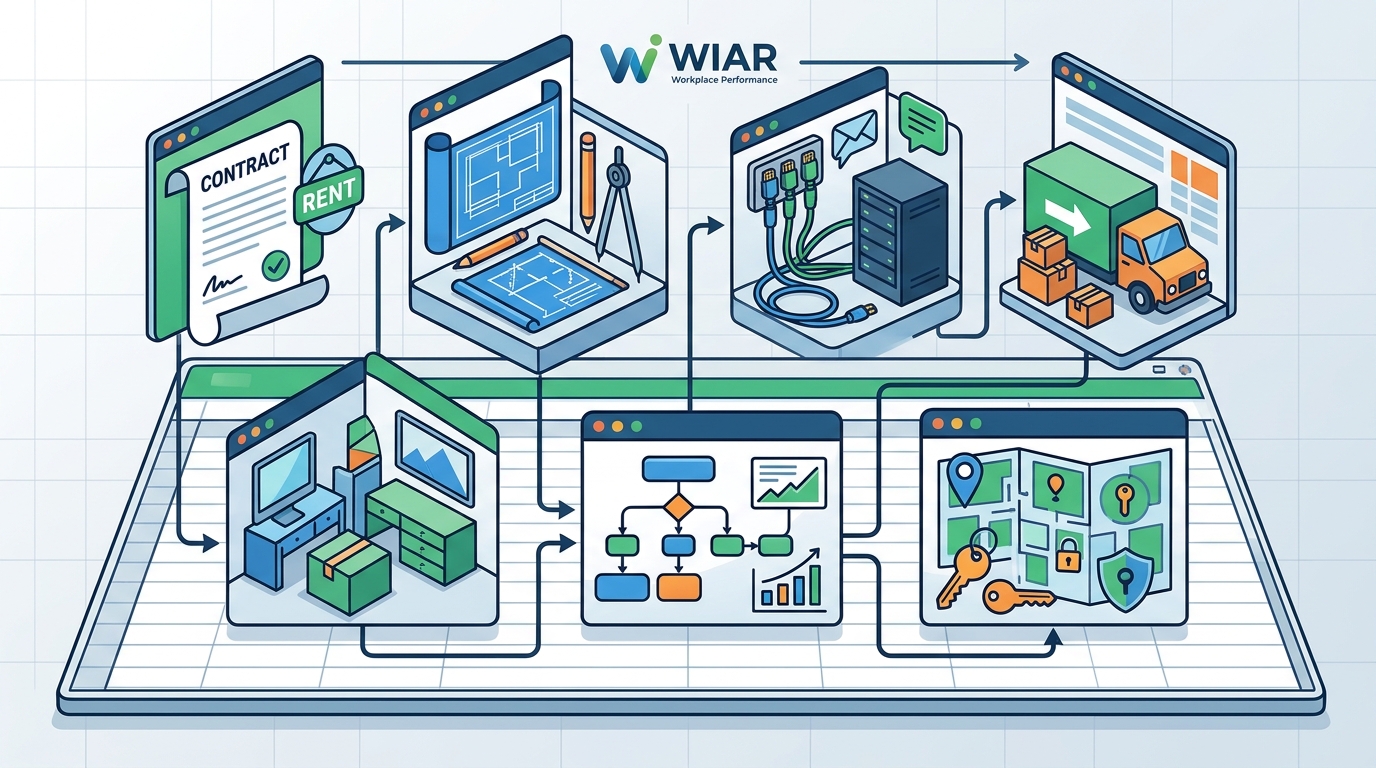
5. Moving and Logistics
Logistics costs cover the physical relocation of assets and personnel. This includes packing materials, transport, and the labor required to unpack and install equipment. For large organizations, this can be a complex operation requiring phased moves to maintain business continuity. WIAR plans these activities to minimize downtime and operational disruption.
6. Facility Management and Services
Ongoing operational costs must be factored into the initial budget. This category includes cleaning, waste management, security, and maintenance contracts. These recurring expenses impact the long-term viability of the new workplace. WIAR’s integrated approach ensures that service levels are defined and contracted before the move, providing clarity on future spending.
7. Contingency and Risk
Choosing the Right Approach
When estimating your budget, prioritize transparency and risk management. A consultant who offers open book accounting and risk-bearing delivery provides the highest level of financial protection. WIAR Workplace Performance brings 25 years of experience to this process, having delivered over 600 successful transformations with 100 percent of projects completed within budget. To begin your budget estimation, for a no-obligation strategy consultation.
Frequently Asked Questions
What is the 75/5 Rule in workplace budgeting?
The 75/5 Rule is a financial guideline suggesting that 75 percent of an organization's budget goes to talent, while only 5 percent goes to the workplace. This highlights the disproportionate impact that facility costs can have on employee performance.
How can procurement reduce office move costs?
Procurement reduces costs by leveraging competitive tendering and market power. WIAR achieves a 25 to 40 percent reduction in investment and operating costs by comparing suppliers objectively and negotiating from a position of independence.
What is open book accounting in project management?
Open book accounting is a transparency model where all project costs, margins, and supplier invoices are shared with the client. This ensures that the client sees exactly where their money is going and builds trust in the advisory process.
Does WIAR handle IT infrastructure during a move?
WIAR coordinates IT infrastructure as part of the integrated project management. While they do not install the hardware themselves, they manage the specifications, tendering, and coordination with IT vendors to ensure seamless integration.
How does WIAR ensure projects stay within budget?
WIAR ensures projects stay within budget through risk-bearing project management and strict financial discipline. Their track record shows 100 percent of projects delivered within the agreed budget, backed by a guarantee of quality and transparency.