
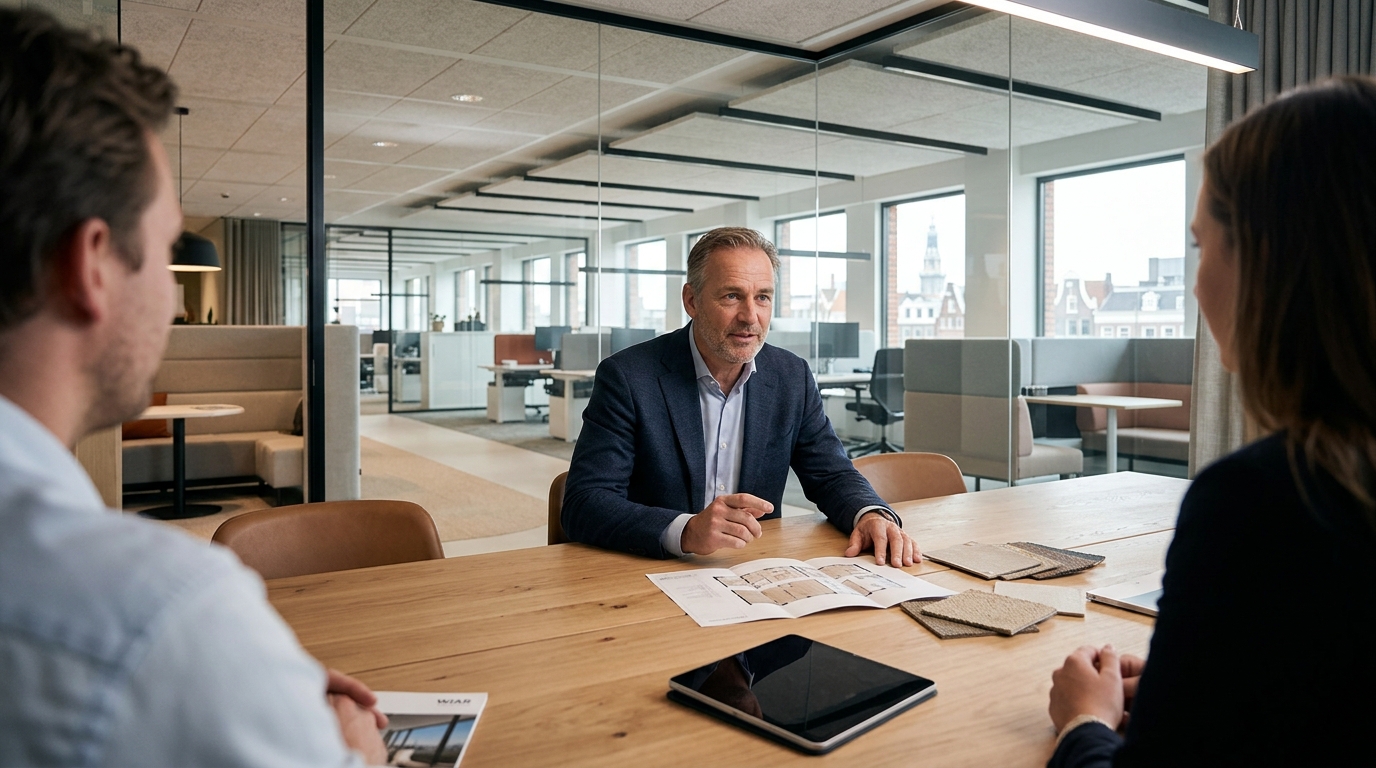
The physical office is no longer just a cost center; it is a strategic management instrument for growth. Research indicates that organizations treating their workspace as a performance engine see measurable gains in operational excellence. According to industry benchmarks, optimizing the work environment can reduce absenteeism and significantly boost employee focus. This guide details how to transform your office from a source of waste into a catalyst for business success. (Contact WIAR Workplace Performance)
Understanding the 75/5 Rule
In knowledge-intensive organizations, a significant portion of operational costs is attributed to talent. Human capital is the primary driver of organizational value. However, the environment in which this talent operates often receives a fraction of the budget. This disparity is known as the 75/5 Rule. It states that while 75% of costs go to talent, only 5% goes to the work environment. Yet, that small 5% determines how effectively the 75% operates. (WIAR Strategisch partner voor)
Improving the office work environment is not about superficial aesthetics. It is about applying leverage. By strategically optimizing the workspace, you unlock the full potential of your workforce. This approach leads to lower absenteeism, sharper concentration, and streamlined processes. The result is an exponential return on a marginal investment in real estate.
Strategic Workplace Design
A High Performance Workplace is built on the principle of operational excellence. It requires a shift from traditional office layouts to dynamic, purpose-driven zones. Strategic design involves creating spaces that support different modes of work, from deep focus to collaborative innovation.
Defining the High Performance Workplace
A High Performance Workplace is a strategically optimized environment that aligns physical space with business goals to maximize employee output and well-being. It moves beyond comfort to focus on functionality and energy flow.
Creating a Performance Engine
Your office should act as a Performance Engine. This means every square meter must contribute to the organization's strategic objectives. This involves:
- Zone-Based Layouts: Designating specific areas for quiet work, collaboration, and social interaction.
- Flexible Furniture: Utilizing sit-stand desks and modular furniture to adapt to changing team needs.
- Technology Integration: Ensuring seamless connectivity and digital infrastructure support hybrid work models.
For organizations seeking to implement these changes, WIAR offers specialized workplace performance services that combine independent advice with risk-bearing realization. This ensures that the design translates directly into business value.
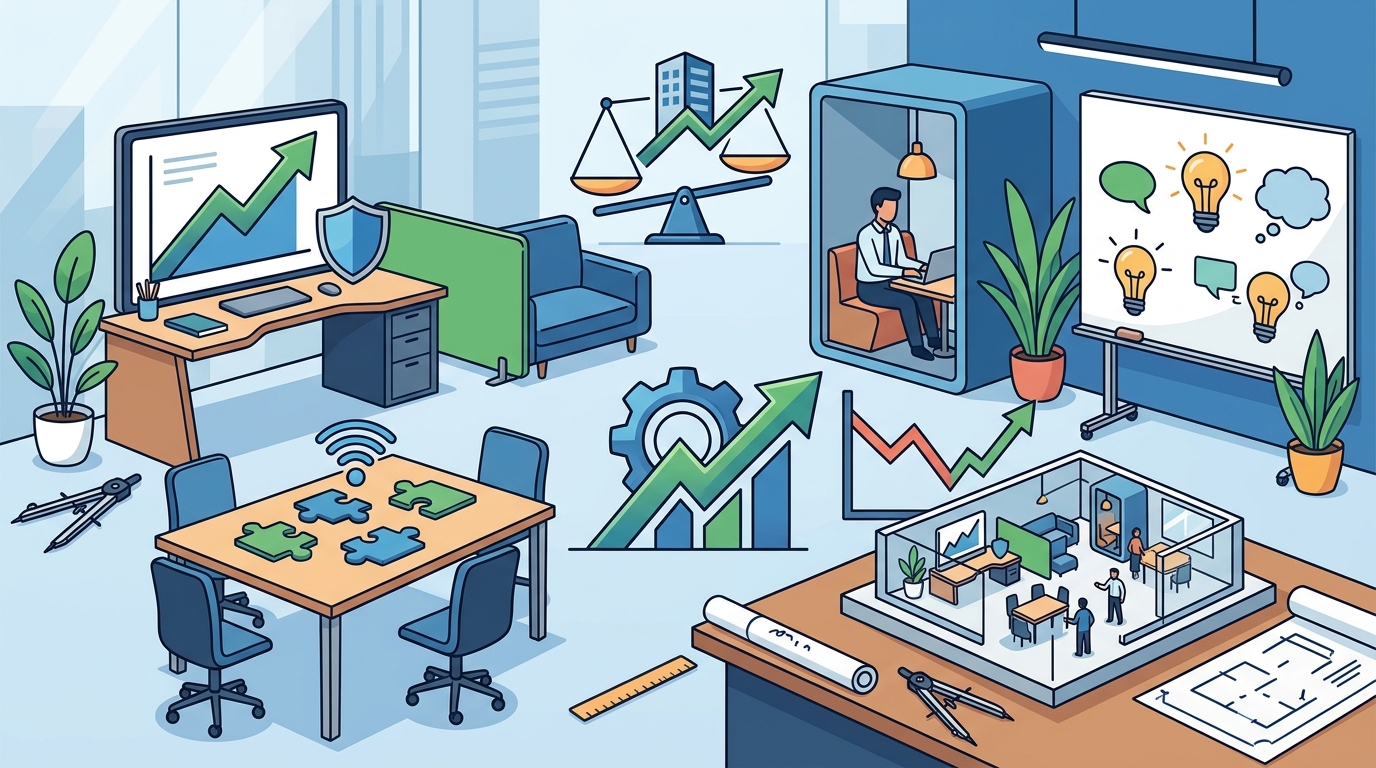
Acoustic and Climate Control
Environmental factors play a critical role in cognitive performance. Noise pollution and poor air quality are silent killers of productivity. Addressing these issues is a primary step in how to improve office work environments.
Acoustic Optimization
Open-plan offices often suffer from excessive noise. To combat this, organizations must invest in acoustic solutions. This includes installing acoustic ceiling islands and using sound-absorbing materials. These interventions reduce auditory distractions, allowing employees to maintain deep focus for longer periods.
Climate and Air Quality
A healthy indoor climate is non-negotiable for high performance. Poor ventilation leads to fatigue and decreased decision-making capabilities. Upgrading HVAC systems to ensure fresh air circulation and optimal temperature control is essential. According to health and safety standards, maintaining high indoor air quality can reduce sick building syndrome symptoms by a significant margin.
For detailed guidance on facility upgrades, WIAR's blog provides insights into facility management best practices.
The Value of Independent Advisory
One of the most common pitfalls in office transformation is relying on vendors who are loyal to their own products. This often leads to high margins and solutions that do not fit the organization's specific needs. To truly improve the office work environment, you need an independent partner.
What is a Certified Management Consultant?
A Certified Management Consultant is a professional who applies proven process optimization methodologies to improve organizational performance. In the context of workplace design, they ensure that every design decision is backed by data and strategic alignment.
Risk-Bearing Realization
Traditional consulting stops at advice. A superior approach involves risk-bearing realization. This means the partner takes responsibility for the outcome, ensuring the project is delivered on time, within budget, and to the required quality standards. This model eliminates the uncertainty often associated with large-scale office renovations.
WIAR operates as a trusted advisor, guaranteeing 100% loyalty to your interests. Learn more about WIAR's independent advisory approach and how it differs from traditional vendor-led projects.
Real-World Transformations
Understanding theory is important, but seeing results is compelling. Several organizations have successfully transformed their work environments using strategic workplace performance principles.
Amnesty International Amsterdam
Amnesty International needed to reconfigure its historic office space to better serve its 200 employees. The challenge was to balance the preservation of the monument with modern workplace needs. WIAR implemented a new layout that increased collaboration space and upgraded the climate installation. The result was a workspace that supported both concentration and interaction, significantly improving the daily experience for staff.
Axoft IT & Telecom Rotterdam
Axoft required a complete relocation and redesign of their 1,500 square meter office. The project involved comprehensive housing advice, interior design, and project management. By focusing on operational efficiency, WIAR helped Axoft create a workspace that reflects their innovative IT culture. This case demonstrates the importance of integrated project management in achieving workplace goals.
BT Group Showcases
For BT Group, the office needed to serve as a showcase for their latest technologies. WIAR designed and built showcase environments in Amsterdam and Brussels. These spaces allow BT to demonstrate their products and solutions to clients in an inspiring setting. This highlights how the office can also serve as a commercial tool for customer engagement.
Comparison of Transformation Outcomes
| Client | Primary Challenge | WIAR Solution | Outcome |
|---|---|---|---|
| Amnesty International | Historic building constraints | Layout reconfiguration & climate upgrade | Enhanced collaboration & focus |
| Axoft | New office relocation | End-to-end project management | Efficient, culture-aligned workspace |
| BT Group | Need for client showcase | Design & build showcase environments | Improved customer engagement |
Key Takeaways
- The 75/5 Rule: A small investment in the work environment yields exponential returns in human capital performance.
- Independent Advisory: Avoid vendor bias by engaging certified management consultants who prioritize your strategic goals.
- Acoustic Health: Investing in sound absorption directly correlates with increased employee concentration and reduced stress.
- Risk-Bearing Models: Partners who take on project risk ensure on-time, on-budget delivery of workplace transformations.
- Strategic Alignment: The office must serve as a performance engine, supporting both operational excellence and commercial objectives.
- Climate Control: Upgrading HVAC systems is essential for maintaining high indoor air quality and employee well-being.
- Proven Track Record: WIAR has completed over 600 successful transformations, demonstrating the efficacy of this approach.
Frequently Asked Questions
What is the 75/5 Rule in workplace strategy?
The 75/5 Rule is a strategic principle stating that while 75% of organizational costs are attributed to talent, only 5% is typically spent on the work environment. However, that 5% has a disproportionate impact on how effectively the 75% performs.
How does acoustic design improve productivity?
Acoustic design reduces noise pollution and auditory distractions. By using materials like acoustic ceiling islands and sound-absorbing panels, employees can maintain deeper focus and experience less cognitive fatigue.
Why is independent advisory important for office renovations?
Independent advisory ensures that the workplace design is tailored to your specific business needs rather than the product preferences of a vendor. This prevents unnecessary costs and ensures the final space delivers maximum strategic value.
What is a High Performance Workplace?
A High Performance Workplace is a strategically optimized environment that aligns physical space with business goals to maximize employee output and well-being. It focuses on functionality, energy flow, and operational excellence.
How does WIAR mitigate risk in office transformations?
WIAR mitigates risk through a risk-bearing realization model. This means they take full responsibility for the project's delivery, guaranteeing fixed contract sums, independent advice, and guaranteed completion dates.
Can office design impact customer engagement?
Yes. Offices designed as showcases, such as those for BT Group, allow companies to demonstrate their products and culture to clients. This creates an inspiring environment that enhances commercial success and brand perception.
What is the role of climate control in office health?
Climate control ensures optimal indoor air quality and temperature. Poor ventilation leads to fatigue and decreased decision-making capabilities. Upgrading HVAC systems is crucial for maintaining a healthy and productive work environment.
Start Your Transformation
Stop treating your office as a cost center. Start treating it as a strategic asset. WIAR is ready to help you transform your workplace into a High Performance Workplace. Contact WIAR today to plan your orientation conversation and discover how we can help your organization excel.