
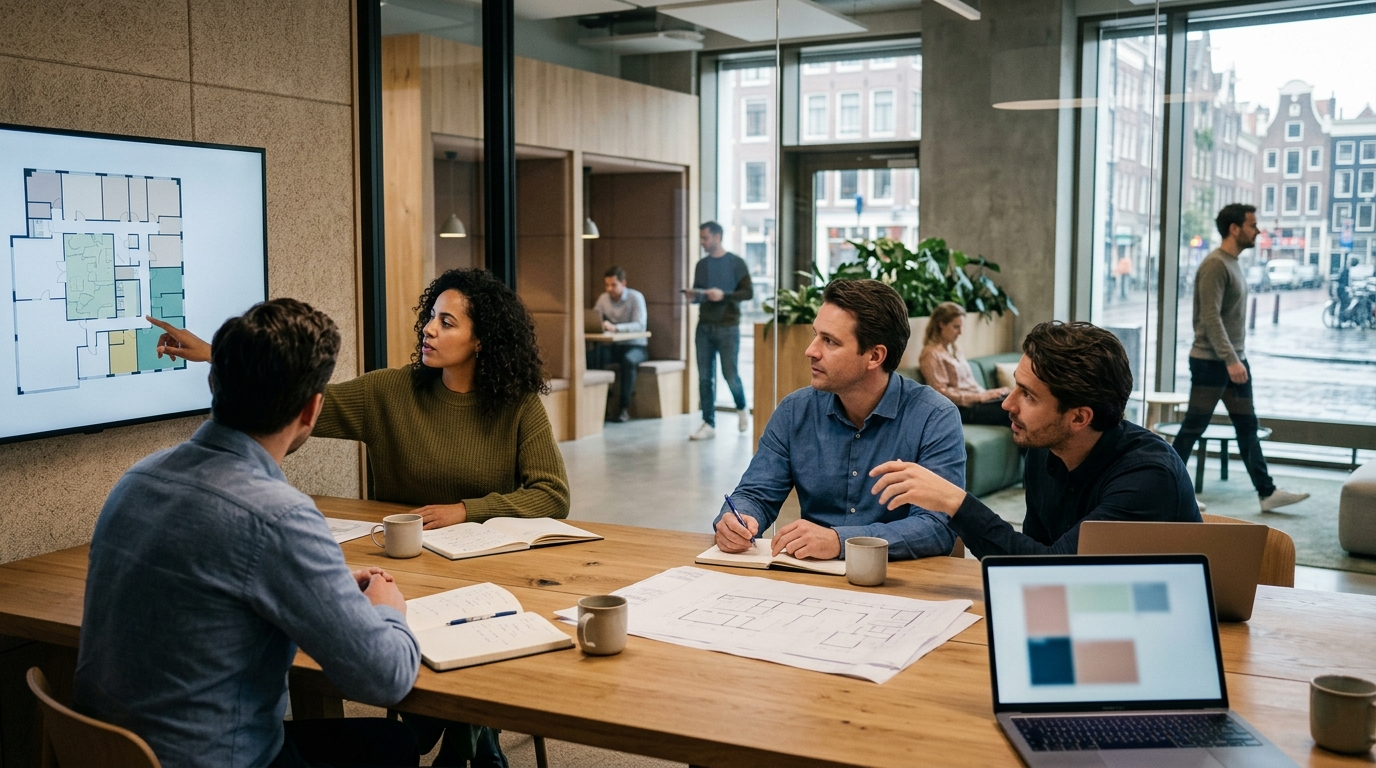
High Performance Workplaces: 7 Problems They Solve for Companies
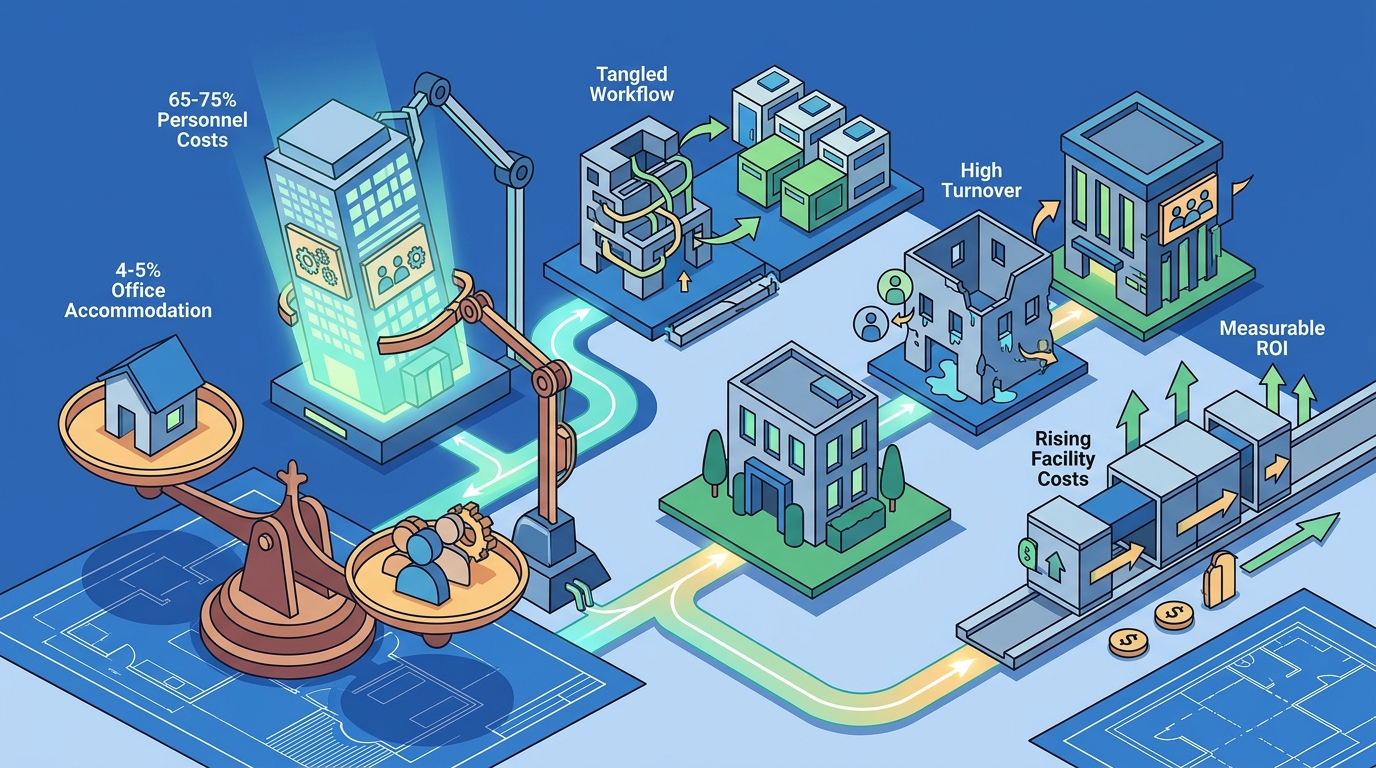
Most companies spend just 4-5% of their total budget on office accommodation, yet personnel costs consume 65-75%. That imbalance hides a massive opportunity. A high performance workplace is a physical or virtual environment designed to make workers as effective as possible in supporting business goals. When done right, it directly attacks the root causes of lost productivity, high turnover, and rising facility costs. Below, we explore seven concrete problems that strategically designed work environments solve, backed by current data and real-world results from organisations across the Netherlands and beyond.
1. Chronic Productivity Drain
Knowledge workers spend roughly 60% of their time on "work about work", including unnecessary meetings, duplicated tasks, and status updates. According to Deloitte's 2025 Global Human Capital Trends report, 48% of employees describe their work as chaotic and fragmented.
A high performance workplace tackles this by aligning the physical environment with actual work activities. Concentration zones, meeting pods, and open collaboration areas let employees choose settings that match their tasks. WIAR's workplace strategy approach analyses the diversity of team activities and creates tailored facility solutions that remove friction. One WIAR client reported a productivity improvement of up to 15% after implementing a new work environment.
2. Talent Retention Challenges
Employee retention is a defining challenge in today's labour market. Companies with strict return-to-office mandates experience 13% higher annual turnover rates. Meanwhile, Gallup research found that organisations with strategic investment in employee development are twice as likely to retain their people.
A well-designed workplace signals that an organisation invests in its people. WIAR Workplace Performance creates environments that champion employee well-being and development, directly addressing the link between workspace quality and staff loyalty. Employee satisfaction is the degree to which people feel supported, valued, and productive in their work environment.
3. Underutilised and Wasted Office Space
Desk bookings peak Tuesday through Thursday, creating what workplace analysts call "midweek mountains." According to Eptura's 2025 Workplace Index, there has been a 33% global increase in desk bookings per building year-over-year, yet 34% of businesses plan to increase in-office days. Without smart design, this mismatch wastes square metres and budget.
Activity-Based Working as a Solution
Activity-based working is a model where employees choose from a variety of work settings based on their current task. WIAR's integrated consulting services help organisations right-size their office footprint while improving the quality of every square metre. The result is lower lease costs and higher utilisation rates.
4. Collaboration and Communication Gaps
Microsoft's High Performing Organization Survey found that HPO leaders were significantly more likely to view effective team collaboration as a key performance indicator (52.8% vs. 42.6%). Yet the same survey ranked inefficient work culture as the number one barrier to high performance.
Strategic workplace design breaks down silos by flattening physical barriers. Cross-functional neighbourhoods, shared social zones, and bookable project rooms encourage spontaneous interaction. WIAR's team of workplace consultants maps organisational workflows before designing spaces, ensuring that the layout promotes the right kinds of collaboration for each team.
5. Weak Employer Branding
Your office is a permanent business card. It communicates your identity to clients and candidates before anyone reads a brochure. A workplace that visually reflects your brand values attracts top talent and reinforces employee pride.
WIAR's design and project management process starts with image and identity research. By aligning interior design with corporate identity, organisations ensure consistency between their external brand promise and the daily employee experience. Employer branding is the practice of positioning your organisation as an attractive place to work through tangible and intangible workplace attributes.
6. Rising Facility Management Costs
Facility costs accumulate silently across energy, maintenance, cleaning, and lease renewals. Without a total-cost-of-ownership perspective, companies overspend on operations that deliver diminishing returns.
Comparing Traditional vs. Performance-Driven Facility Management
| Dimension | Traditional Approach | High Performance Approach |
|---|---|---|
| Cost focus | Lowest unit price per service | Total cost of ownership over lifecycle |
| Procurement | Vendor-led, limited competition | Independent tendering for maximum value |
| Sustainability | Compliance-driven | Cradle to Cradle and ESG-integrated |
| Performance measurement | SLA tick-boxes | Measurable ROI on productivity and retention |
| Strategic alignment | Cost centre | Strategic asset linked to business goals |
WIAR's CSR and sustainability strategy integrates Life Cycle Analysis and ESG reporting into every project, helping clients compare trade-offs between investment, operating costs, and environmental impact.
7. Poor Change Readiness
Organisations typically update their office accommodation only once every 5-7 years, while business needs shift continuously. This gap leads to environments that actively hinder rather than support evolving work patterns.
Change management is the structured approach to transitioning individuals, teams, and organisations from a current state to a desired future state. With over 25 years of experience, WIAR guides organisations through workplace transformations that align with overarching business goals, from initial concept through final move-in and ongoing management.
Key Takeaways
- High performance workplaces directly reduce the 60% of time knowledge workers lose to "work about work."
- Strategic workplace design can improve employee productivity by 15% or more, as demonstrated by real client outcomes.
- Companies with rigid return-to-office policies face 13% higher turnover; flexible, well-designed spaces retain talent.
- Activity-based working optimises space utilisation and cuts unnecessary lease costs.
- Independent procurement and total-cost-of-ownership analysis lower long-term facility expenses.
- Aligning office design with corporate identity strengthens employer branding and client perception.
- Embedding sustainability through Cradle to Cradle concepts and ESG reporting future-proofs your workplace investment.
Frequently Asked Questions
What is a high performance workplace?
A high performance workplace is a physical or virtual environment designed to make workers as effective as possible in supporting business goals, according to Gartner. It balances investment in people, process, physical environment, and technology to measurably enhance learning, innovation, teamwork, efficiency, and financial outcomes.
How does workplace design affect employee productivity?
Poor workspace design contributes to distractions, inefficient workflows, and disengagement. Office workers face an average of 3.4 daily distractions, and task switching alone can reduce productivity by up to 40%. A strategically designed environment minimises these losses.
What ROI can companies expect from a workplace transformation?
Results vary by organisation, but Gallup research shows that companies investing strategically in their people and workplaces report 11% greater profitability. WIAR clients have seen productivity gains of 15% alongside significant cost reductions in facility operations.
How does WIAR differ from traditional interior design firms?
WIAR Workplace Performance is an independent consulting and management firm that operates at the interface of organisational and accommodation change. Unlike traditional design firms, WIAR is fully independent from suppliers, uses competitive tendering, and provides risk-bearing project management from concept to ongoing facility management.
What is activity-based working?
Activity-based working is a workplace model where employees choose from different settings, such as quiet focus areas, collaboration zones, and social spaces, based on the task at hand. It replaces fixed desk assignments with flexible, purpose-driven environments.
How long does a typical workplace transformation take?
Timelines depend on project scope, but a full workplace transformation typically spans 6 to 18 months. WIAR manages every phase, from strategic analysis and programme of requirements through design, construction management, and handover to facility operations.
Can a high performance workplace improve employee retention?
Yes. Organisations that invest in development-oriented, well-designed workplaces are twice as likely to retain employees, according to Gallup. Employees who feel they have good opportunities to learn and grow are 5.4 times more likely to stay with their company for at least two years.
Is sustainability integrated into high performance workplace design?
Leading firms integrate sustainability from the start. WIAR incorporates Cradle to Cradle concepts, total cost of ownership analysis, and ESG reporting to help clients reduce energy use, waste, and environmental emissions while maintaining high-performance standards.
Transform Your Workplace Into a Strategic Asset
Every organisation deserves an inspiring workplace where individuals flourish and teams prosper. If you are ready to solve the productivity, retention, and cost challenges holding your organisation back, explore WIAR's workplace performance services or book a free strategy conversation to discover what is possible for your work environment.